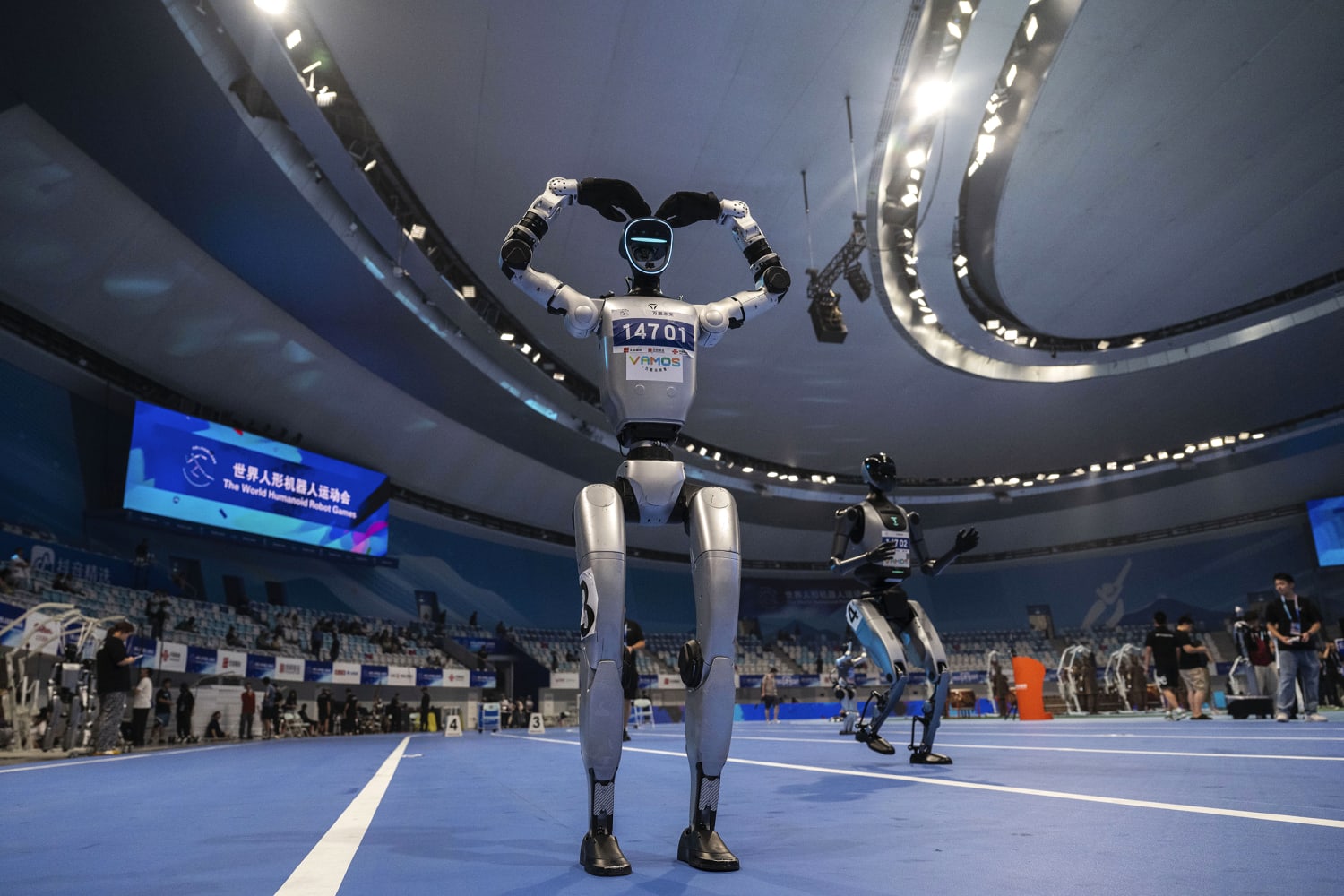

China recently hosted a groundbreaking sports competition for humanoid robots, a testament to the nation’s ongoing commitment to advancing artificial intelligence. This pioneering event marks a significant milestone, showcasing the rapid development and integration of robotics into new and dynamic applications. The competition brought together an array of sophisticated machines, each designed to perform a variety of athletic tasks, from running and jumping to more complex maneuvers. This event underscores China’s ambition to be a global leader in AI and robotics, pushing the boundaries of what these technologies can achieve.
The tournament served as a platform for engineers and researchers to test the capabilities of their latest creations in a competitive environment. Unlike traditional robotic competitions that often focus on industrial or logistical tasks, this event was centered on athletic prowess and agility. The robots demonstrated an impressive level of coordination and balance, executing movements that would have been unimaginable just a few years ago. This leap forward is the result of significant advancements in machine learning, sensor technology, and mechanical engineering. The data collected from these performances will be invaluable for future research and development, helping to refine the algorithms that govern robotic movement and decision-making.
An impressive aspect of the contest was the range of designs and strategies shown. Several teams concentrated on crafting two-legged robots that replicated human walking patterns with striking precision, whereas others investigated more artistic and efficient movement styles. This variety in design highlights the diverse philosophies and engineering hurdles faced in creating a truly adaptable humanoid robot. The judges assessed the robots not only on their pace and task completion success but also on the smoothness and elegance of their actions, infusing an artistic element into the technical challenge. This thorough evaluation system promoted innovation and a comprehensive approach to robot design.
This occasion goes beyond a mere athletic show; it represents a clear indicator of the crucial role China assigns to the AI industry. The authorities have deeply invested in this area, setting up research facilities and nurturing an innovative environment. The objective is to not only advance cutting-edge technologies but also to generate new sectors and economic possibilities. Through showcasing robotics in such a prominent event, China seeks to motivate a new wave of scientists and engineers to follow careers in AI and automation. It serves as a significant way to engage the public, making intricate technology more accessible and captivating to a broader audience. The achievement of this contest illustrates that the future of AI lies not solely in theoretical algorithms but in concrete, physical entities capable of interacting with and transforming the surrounding world.
The global reaction to the event has been a mix of admiration and concern. On one hand, the technological achievements are undeniable and have been praised by experts worldwide. The competition is seen as a benchmark for what is possible in robotics today. On the other hand, it has reignited debates about the ethical implications of AI and humanoid robots. Questions about job displacement, the role of robots in society, and the potential for these technologies to be used for military purposes have all been brought to the forefront. China’s proactive approach to these developments suggests a willingness to push ahead with innovation, even as these complex societal questions remain unresolved. The event serves as a stark reminder that the AI revolution is not a distant future but a present reality that is unfolding at an unprecedented pace.
The challenge additionally underscored the cooperative aspect of scientific advancement. Groups from various universities, research centers, and private firms collaborated, exchanging insights and driving one another to reach new levels. Such open interaction is essential for speeding up technological progress. Although the event had a competitive edge, there was an evident atmosphere of camaraderie and shared goals among the attendees. The emphasis was on addressing mutual issues and advancing the discipline collectively. This collaborative spirit is a vital component of China’s plan to establish itself as a global center for AI research. By fostering an environment conducive to innovation, the country is setting the foundation for long-lasting leadership in the future.
Looking ahead, the success of this inaugural event is likely to spur similar competitions in other countries. The race to develop the most advanced humanoid robots is heating up, and nations are eager to demonstrate their technological prowess. The future of robotics will not be confined to laboratories or factories; it will increasingly involve machines that can operate in dynamic, unstructured environments, from our homes to the athletic field. This competition is a glimpse into that future, where robots are not just tools but partners and competitors in a wide range of human endeavors. The lessons learned from this event will inform the next generation of robotic design, leading to machines that are more capable, adaptable, and integrated into our daily lives.
The event’s impact extends beyond the technological sphere, influencing cultural perceptions of robots. By presenting them as athletes and competitors, the competition helps to demystify these machines and make them more relatable. It challenges the traditional portrayal of robots in science fiction as either menacing or purely utilitarian. Instead, it showcases their potential for creativity, grace, and even a form of “personality” as they navigate the complexities of a sports course. This shift in public perception is critical for the long-term adoption and integration of AI into society. As robots become more common, our comfort level with them will depend on our understanding and acceptance of their capabilities. The competition is a step toward building that bridge between human and machine.
The inaugural humanoid robot sports competition in China serves as a potent emblem of the country’s aspirations and heralds a new chapter in tech innovation. It clearly demonstrates that AI transcends theoretical studies, evolving into a practical domain influencing real-world scenarios and expanding human and machine capabilities. This event has elevated the benchmark for robotic contests, with the lessons learned poised to drive the forthcoming surge of progress. It underscores that the future of technology is being crafted right now, one competitive robot at a time, and that the quest for dominance in AI is indeed underway.