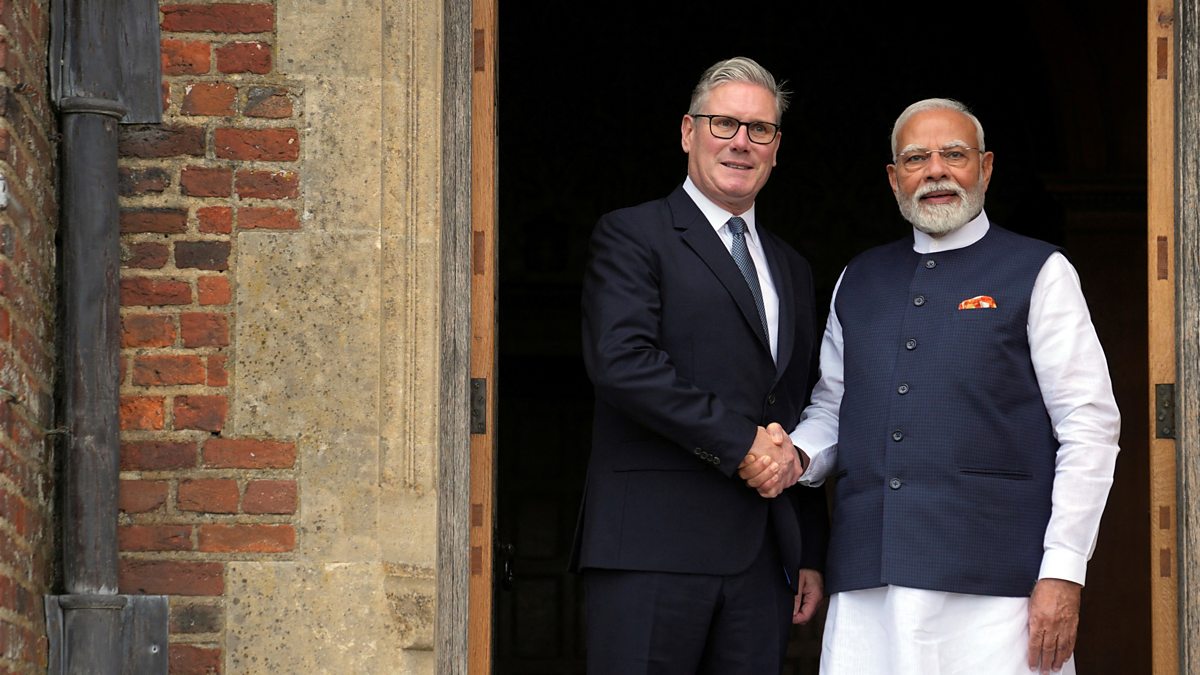

The United Kingdom and India have entered into a new era of economic cooperation, as Prime Minister Keir Starmer and Indian Prime Minister Narendra Modi formalized a landmark trade agreement valued at £6 billion. The deal marks a significant milestone in the economic and diplomatic relationship between the two nations, opening the door to new opportunities across sectors such as technology, pharmaceuticals, green energy, and financial services.
Este reciente acuerdo se alcanza después de años de negociaciones con el objetivo de reforzar los lazos bilaterales en la era posterior al Brexit. Con el Reino Unido buscando redefinir su posición comercial global e India avanzando como una potencia económica importante, ambos gobiernos consideran este acuerdo como un paso favorable para ambos. La asociación no solo tiene como objetivo aumentar el intercambio comercial de bienes y servicios, sino que también establece un precedente para una colaboración más amplia en innovación, infraestructura e inversión.
For Prime Minister Starmer, the agreement represents one of the first major foreign policy achievements of his leadership. His government has prioritized renewing global partnerships with emerging economies, and this deal with India aligns with that strategic vision. By securing an agreement of this scale early in his tenure, Starmer signals a commitment to restoring the UK’s global economic relevance.
The agreement involves mutual pledges by both countries to reduce trade obstacles, encourage investment, and enhance job opportunities. Various companies from the UK are anticipated to extend their businesses in India, whereas Indian corporations will broaden their activities in the UK markets. This mutual strategy is projected to enhance job creation and economic participation in both regions.
One of the core elements of the deal is enhanced collaboration in the technology sector. With India’s expanding digital economy and the UK’s established tech industry, both countries are set to benefit from increased cooperation in areas such as artificial intelligence, cybersecurity, and software development. Shared expertise and cross-border innovation are central to this component of the agreement.
Healthcare and pharmaceuticals also feature prominently in the trade package. Indian pharmaceutical companies, known for their global production capacities, will gain more streamlined access to UK markets. In return, British health technology firms are poised to enter India’s growing healthcare infrastructure space, bringing advanced medical technologies and digital health solutions.
Green energy remains a significant area of focus. Both countries have dedicated themselves to environmental objectives through global climate accords, and this agreement strengthens their mutual plan to promote sustainable methods. The deal specifies collaborative endeavors in clean energy research, electric vehicles, and renewable infrastructure development. These projects are anticipated to aid in achieving lasting reductions in emissions and foster the creation of new businesses and job opportunities.
Financial services, a historically strong sector in the UK, will also see expanded collaboration. Indian banks and financial institutions are expected to deepen their engagement with the London financial ecosystem, while British firms explore India’s rapidly growing financial markets. This cross-investment is anticipated to strengthen regulatory cooperation and facilitate capital flow between the two economies.
Both nations are set to incorporate education and workforce growth into their plan. According to the devised agreement, the two countries are committed to advancing academic exchange programs and skills enhancement initiatives. This encompasses streamlining visa procedures for students and professionals, encouraging connections among universities, and facilitating the mutual acknowledgment of credentials.
For India, the agreement represents a chance to tap into advanced British technologies, draw investment into important sectors, and boost exports to a significant Western market. For the UK, India provides an opportunity to reach a large and fast-expanding consumer market, in addition to being a center for innovation and skilled workforce. This strategic alignment highlights a wider geopolitical transition, as nations look to diversify trade relationships in response to evolving global trends.
Despite the optimism, industry commentators and market experts will be vigilantly observing how the agreement is put into action to verify that promises lead to actual results. There are still uncertainties regarding regulatory consistency, labor regulations, and the effects the agreement will have on small enterprises in both nations. Openness and responsibility during the deal’s execution will be crucial for its enduring success.
In a larger context, this accord addresses evolving global economic trends. As systems for multilateral trade encounter growing obstacles, bilateral accords of this nature are increasingly prevalent. The UK-India collaboration might act as a template for future agreements with other rapidly growing economies.
Diplomatically, the agreement also symbolizes a deepening political relationship. Beyond trade, both governments have pledged to collaborate on strategic issues such as regional security, defense cooperation, and counterterrorism. These shared commitments enhance the geopolitical dimension of the economic partnership, reinforcing both countries’ interests in a stable and multipolar international order.
By entering into this £6 billion trade agreement, the UK and India embark on a new era of cooperation. The accord demonstrates a mutual desire to create a strong and progressive alliance that can respond to upcoming challenges. As the elements of the deal start to unfold, attention will be focused on the impact this economic link between London and New Delhi will have on trade, innovation, and diplomacy in the future.