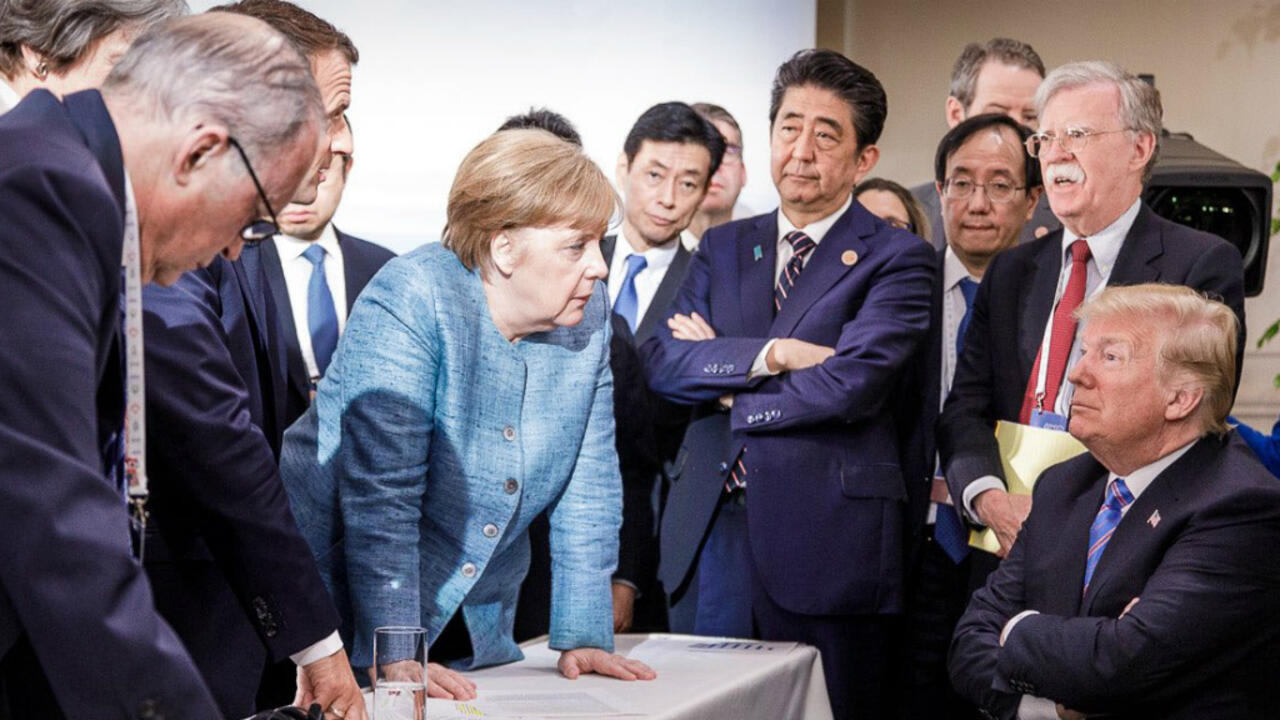

A fresh wave of tariff warnings has heightened economic unpredictability on both sides of the Atlantic, prompting worries that these trade tensions may expand into wider financial and political repercussions. What initially emerged as a diplomatic impasse now threatens to evolve into a long-term obstacle for two of the planet’s most tightly linked economies.
The most recent alerts voiced by Donald Trump have stirred renewed concern over a potential trade clash between the United States and multiple European countries, as the administration’s hint at new tariffs on imports from several Northern and Western European nations has heightened strains on logistics networks, business strategies and diplomatic ties, and although tariffs have traditionally served as leverage in negotiations, the scope, timing and geopolitical framing of these moves have rendered them especially unsettling.
At stake is not only the immediate cost of imported goods, but also the long-term stability of trade relationships that underpin both economies. Businesses on both sides of the Atlantic now face renewed uncertainty, as governments weigh retaliation, compromise or alternative alliances. Economists warn that even if the tariffs are never fully implemented, the prolonged ambiguity surrounding trade policy could itself dampen growth.
Tariff threats and Europe’s early response
Over the weekend, statements indicated that the U.S. administration is weighing the implementation of a 10% tariff on goods coming from Denmark, Finland, France, Germany, the Netherlands, Norway, Sweden and the United Kingdom, with the option to elevate that rate to 25% later in the year if negotiations break down. This potential shift would represent a notable change from recent attempts to steady transatlantic trade following earlier disagreements.
European leaders responded swiftly. Emergency consultations were convened among national representatives, reflecting the seriousness with which the proposal was received. In France, President Emmanuel Macron reportedly urged the bloc to prepare for the use of its so-called anti-coercion instrument, an enforcement mechanism designed to deter economic pressure from foreign governments.
Often described informally as a “trade bazooka,” this instrument enables the European Union to curb market access, levy counter-tariffs, or enforce export restrictions whenever it concludes that a trading partner is deploying economic pressure to gain political leverage. Although the mechanism was initially crafted with strategic rivals in mind, the fact that it could be directed at the United States highlights how seriously Europe views the situation.
Officials from the European Commission have emphasized that all options remain available. Although no immediate decision has been announced, the message to Washington has been clear: Europe is prepared to respond if tariffs are enacted. The possibility of reviving previously delayed retaliatory measures, reportedly amounting to tens of billions of euros, further highlights how quickly the situation could escalate.
Economic exposure on both sides of the Atlantic
The economic ties between the United States and Europe are extensive and deeply integrated. Major European economies count the U.S. as one of their largest export destinations, while American companies rely heavily on European markets for both goods and services. Any disruption to this flow carries consequences that extend beyond headline tariff rates.
Analysts observe that steeper import duties would probably push prices higher for both consumers and companies, as manufacturers tied to transatlantic supply chains may encounter escalating production expenses, and exporters could find it harder to stay competitive if retaliatory actions emerge, gradually putting pressure on investment, employment, and productivity gains.
From a macroeconomic standpoint, some economists suggest that persistent tariff hikes may trim a noticeable share from Europe’s overall economic performance, and even slight slowdowns become consequential when spread across expansive, established markets; the United States would likewise feel the impact, as rising costs and diminished export avenues loop back into domestic inflation and weigh on corporate profits.
The risk grows as the effects spread unevenly across the economy, with regions tied to export-driven sectors or major logistics hubs likely experiencing pressure first, while small and medium-sized enterprises may struggle more to handle abrupt cost spikes. For multinational corporations, this uncertainty makes long-range planning more difficult and can slow decisions on building new facilities, upgrading technology or pursuing market growth.
Uncertainty as a drag on business confidence
Beyond the arithmetic of tariffs, uncertainty itself has emerged as a central concern. Trade policy that shifts rapidly or is subject to abrupt reversals makes it difficult for businesses to plan with confidence. Executives must account not only for current regulations, but also for the possibility that rules could change within months or even weeks.
This dynamic has already had tangible effects. In previous periods of tariff volatility, some U.S. companies slowed hiring or postponed capital investments while awaiting clarity. Similar caution is now visible among European firms assessing their exposure to the American market. For sectors such as automotive manufacturing, machinery and consumer goods, where investment cycles span many years, policy unpredictability can be particularly damaging.
Economists have long argued that stable expectations are a prerequisite for sustained growth. When companies cannot reliably forecast costs or market access, they may opt to conserve cash rather than expand operations. Over time, this restraint can translate into slower innovation and reduced competitiveness, even if tariffs are eventually rolled back.
Mounting pressures on current trade agreements
The renewed tariff threats also cast doubt on recent efforts to normalize trade relations. Last year, the United States and European partners reached a tentative understanding aimed at avoiding further escalation and providing a framework for cooperation. Although welcomed by some leaders as a necessary compromise, the agreement was met with skepticism in parts of Europe and has yet to be fully ratified.
The latest developments risk undermining whatever goodwill that arrangement generated. Several European lawmakers have already signaled that approval of new trade deals may be politically untenable while tariff threats remain on the table. Such resistance highlights a broader erosion of trust, as allies question the durability of U.S. commitments.
From a European perspective, the concern extends beyond economics to strategic reliability. Trade agreements are often viewed as expressions of long-term partnership. When they appear vulnerable to abrupt reversal, governments may become more cautious about aligning their economic policies too closely with Washington.
Institutional limits and legal uncertainty
Despite the forceful rhetoric, the final resolution of the tariff conflict is still unclear. Legal disputes may limit the administration’s capacity to enact additional duties, especially if courts closely examine the reliance on emergency authorities as justification. An upcoming ruling from the U.S. Supreme Court on related matters could add further complications, potentially slowing or restricting implementation.
On the European side, activating the anti-coercion instrument would not happen right away, as experts point out that its application requires procedural steps and agreement among member states, a sequence that may stretch over several months, opening space for negotiation yet extending uncertainty for businesses.
Meanwhile, PJM-like complexities do not apply here, but the institutional checks on both sides serve as reminders that trade policy operates within legal and regulatory frameworks that can temper political impulses. Whether those safeguards ultimately de-escalate the conflict or merely delay its impact remains to be seen.
Evolving alliances and far-reaching global consequences
As transatlantic relations face renewed strain, other global players are watching closely. Trade tensions often accelerate diversification strategies, prompting countries to deepen ties with alternative partners. In recent months, several major economies have announced new agreements or strategic partnerships aimed at reducing dependence on any single market.
For Europe, progress on long-running negotiations with South American countries under the Mercosur framework signals an effort to broaden export opportunities. For North America, evolving trade dynamics with Asia illustrate how geopolitical considerations increasingly intersect with economic strategy.
These shifts do not happen overnight, but they can reshape trade flows over time. Once supply chains are reoriented and partnerships established, reversing course becomes costly. As a result, even temporary tariff disputes can have lasting consequences if they accelerate structural changes in global commerce.
Long-term costs beyond tariff revenues
Although tariffs are often portrayed as tools for raising revenue or leverage in negotiations, their wider economic toll is far more elusive. Missed investment prospects, postponed developments and eroded confidence seldom surface in official data, yet they can strongly shape long-term economic expansion.
Economists caution that the true price of trade uncertainty lies not only in higher consumer prices, but in the opportunities forgone. Factories that are never built, research projects that remain unfunded and jobs that are never created all represent hidden costs. Once confidence is shaken, restoring it can take years, even if policies change.
In this context, critics argue that aggressive trade tactics risk undermining the very competitiveness they aim to protect. By introducing volatility into a globalized economy, governments may inadvertently push companies to seek stability elsewhere, eroding domestic advantages over time.
A fragile moment for transatlantic relations
The current dispute unfolds at a delicate moment for the global economy. Inflationary pressures, geopolitical conflicts and rapid technological change already pose significant challenges. Adding trade instability to this mix increases the risk of slower growth and heightened volatility.
For the United States and Europe, the stakes are particularly high. Their economies are deeply intertwined, and their cooperation has long been a pillar of the international economic order. While disagreements are inevitable, the manner in which they are managed can either reinforce resilience or amplify fragility.
As negotiations continue and legal and political processes unfold, businesses and consumers are left navigating an uncertain landscape. Whether the tariff threats ultimately materialize or fade, their impact on confidence and planning is already being felt. The coming months will reveal whether dialogue can restore predictability or whether this episode marks a more enduring shift in transatlantic trade relations.