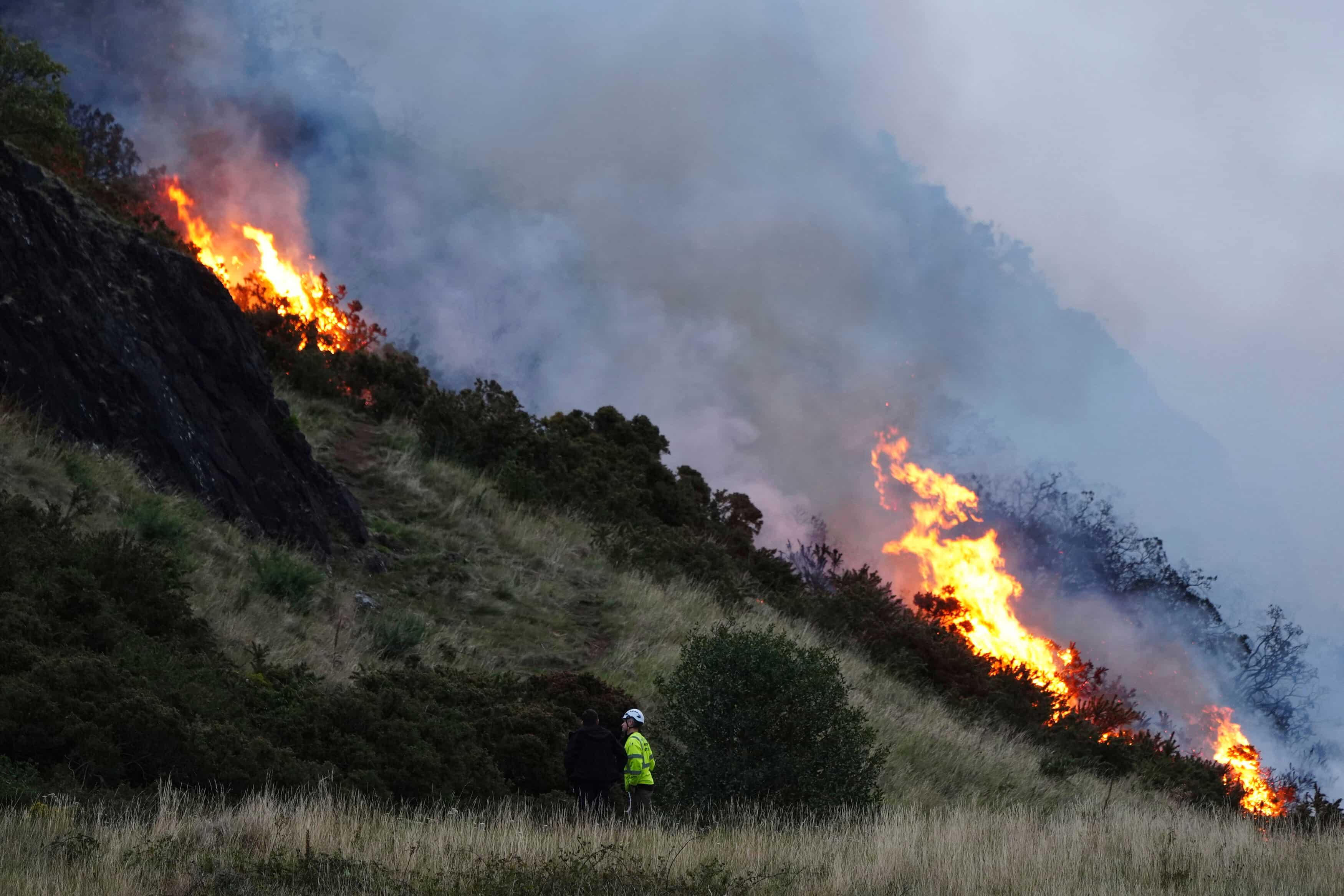

A sudden blaze broke out on Arthur’s Seat, the well-known dormant volcano that towers above Edinburgh, sending plumes of smoke into the skyline and drawing the attention of residents, tourists, and emergency crews alike. The fire, visible from much of the city, ignited during what began as an otherwise calm day in the Scottish capital, quickly sparking concern over both the potential damage to the beloved landmark and the safety of those in the area.
Witnesses reported seeing flames flicker along the grassy slopes before the fire spread to a wider section of the hillside. The dry conditions, a product of several rain-free days, are believed to have contributed to the fire’s rapid growth. While Arthur’s Seat is typically lush and green for much of the year, late summer and early autumn dry spells can leave sections of grassland and gorse particularly vulnerable to ignition.
Firefighters reached the location quickly, assembling teams from various stations throughout Edinburgh. The difficult landscape presented obstacles, limiting vehicle access and requiring rescuers to manually transport gear along twisting paths. Individuals who were strolling or trekking nearby were directed away from the hazardous area, with some being accompanied along the trails by rescue workers.
Arthur’s Seat, located in Holyrood Park, is a geological wonder as well as a central hub for culture and leisure in the city. Reaching a height of 251 meters (823 feet), it provides sweeping views of Edinburgh, the Firth of Forth, and the surrounding areas. Locals and travelers alike frequently hike to its peak, where they often stop to enjoy the wildflowers, birdlife, and extensive views of the city below. Witnessing flames consuming parts of the hill was, for many, a stark reminder of how rapidly natural areas can become endangered.
Officials have not yet confirmed the cause of the fire, though they are investigating whether human activity may have been involved. Open flames, discarded cigarettes, or improperly extinguished barbecues are common culprits in similar grassland fires. Authorities have also stressed the possibility of accidental ignition from broken glass or other materials that can concentrate sunlight. While deliberate arson is considered less likely at this stage, police have not ruled it out.
Social media was quickly flooded with images and videos of the fire, some taken from Princes Street and Calton Hill, others from residents’ flats or nearby roads. The footage showed thick smoke billowing upward, shifting in color from grey to a more ominous black as it intensified. Many users expressed shock and sadness, with some sharing personal memories of hiking Arthur’s Seat or visiting it as part of family traditions.
City officials have reminded the public that Holyrood Park, including Arthur’s Seat, is managed by Historic Environment Scotland, which works closely with emergency services to protect both visitors and the natural environment. While the blaze was being tackled, sections of the park were temporarily closed to prevent onlookers from interfering with firefighting efforts and to ensure no one was placed at risk.
Environmental specialists caution that blazes of this nature may lead to prolonged ecological impacts. While grassland and heathland areas can recover over time, the absence of vegetation exposes the soil to erosion, and some species of plants and animals may need significant time to rebound. Various nesting birds, small mammals, and bugs might lose crucial living spaces if the fire-affected region is broad. Invasive plant species, able to flourish in disrupted soil, might also become established, changing the natural equilibrium of the park’s ecosystem.
El suceso ha reabierto el debate sobre la prevención de incendios en áreas verdes públicas. El Consejo de la Ciudad de Edimburgo y las autoridades de los parques han emitido anteriormente advertencias estacionales sobre el peligro de incendios en el césped, especialmente en períodos de sequía. Es probable que ahora se reconsideren medidas como señalización más clara, incremento de patrullas de guardabosques y campañas de concientización pública tras el incendio.
For residents of Edinburgh, Arthur’s Seat holds more than just scenic value—it’s a symbol woven into the fabric of the city’s identity. The hill’s ancient volcanic rock has stood for millions of years, surviving ice ages, industrial expansion, and countless generations of human settlement. To see it threatened by fire, however briefly, stirs a sense of collective concern that transcends everyday city life.
Para la tarde noche, los equipos de bomberos lograron controlar gran parte del incendio, aunque en algunas zonas las brasas seguían ardiendo. Las autoridades indicaron que sería necesario realizar una vigilancia nocturna para asegurar que el fuego no resurja, especialmente si las condiciones del viento cambian. El olor a humo persistía en algunas partes de la ciudad, recordando los eventos del día y lo frágiles que pueden ser incluso los paisajes más emblemáticos.
As the inquiry progresses, numerous individuals in Edinburgh are contemplating their connection with Arthur’s Seat—not solely as a spot for tourists or a picturesque walk, but as a communal heritage location that requires everyone’s attention and respect for its conservation. Although the hill is expected to heal with time, the blaze acts as a warning story about the dangers of negligence, especially during a period of more erratic weather conditions associated with climate change.
At present, the expectation is that Arthur’s Seat will be restored to its known condition—verdant hills sprinkled with wildflowers, pathways filled with hikers, and peak views free from smoke’s obscurity. However, the blaze will linger in the minds of those who witnessed it, a vivid reminder of nature’s fragility in the center of Scotland’s capital.