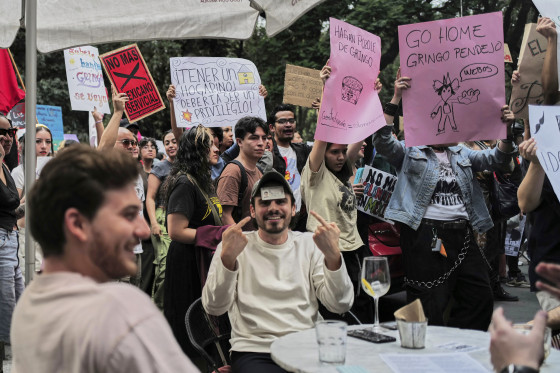

In Mexico, there is growing unrest regarding the effects of gentrification, as local inhabitants express their worries about being pushed out, increasing living expenses, and the decline of community character. Although some opponents have described these demonstrations as xenophobic, the core activists contend that their efforts are a protection of essential human rights, not an assault on foreign people or cultures.
The controversy, playing out in neighborhoods across Mexico City and other urban centers, reflects a growing global challenge: how to balance the influx of new residents, often from wealthier countries, with the rights and stability of long-established local communities. As remote work has gained popularity in recent years, many foreigners—especially from the United States and Europe—have chosen to settle in Mexico, attracted by lower living costs, favorable climate, and rich cultural heritage. While this migration has brought economic opportunities for some, it has also fueled frustration among locals who feel increasingly marginalized in their own cities.
For numerous Mexican citizens, the arrival of wealthier expatriates has triggered a rise in housing prices, causing families to be displaced and traditional neighborhoods to evolve into commercial areas catering to international preferences. Small businesses with long histories, once the core of these communities, have faced challenges competing against popular cafes, boutiques, and upscale developments that often exclude local clientele. As the cost of rentals increases, some locals are driven further towards the city limits or compelled to move away completely.
Public dissatisfaction has erupted publicly through rallies, marches, and online movements. Advocates claim that the core issue extends beyond living expenses to include the safeguarding of cultural heritage, community integrity, and the right to stay in one’s residence. They deny xenophobic labels, stressing that their battle targets systemic economic dynamics that favor the affluent—irrespective of their nationality—over the working classes and underrepresented groups.
Many activists point to the historical roots of gentrification in Mexico, which, they say, are deeply intertwined with colonialism, inequality, and urban planning policies that favor profit over people. In this context, the recent wave of foreign arrivals is seen not as the cause of the problem but as a symptom of larger structural dynamics that have long disadvantaged local populations. The concern is that without meaningful intervention, the fabric of these communities will continue to unravel, leaving behind a cityscape that prioritizes tourism and wealth over authenticity and social justice.
Opponents, on the other hand, perceive the demonstrations from an alternative perspective. A few blame campaigners for unjustly focusing on outsiders and stoking ill-feeling towards new arrivals who, often, are just in search of improved prospects or a varied lifestyle. These opponents contend that immigration, be it local or foreign, has long been integral to the urban development journey and that transformation, though occasionally challenging, is unavoidable in expanding urban areas.
Additionally, some believe that blaming foreign residents oversimplifies the problem and risks fostering divisions. They argue that government policies, local developers, and global economic trends play a much larger role in shaping housing markets than the actions of individual migrants. From this perspective, the solution lies not in protest but in comprehensive urban policy reforms that address affordability, access to housing, and community preservation for everyone, regardless of origin.
For many of the activists, however, the issue is deeply personal. Stories abound of families who have lived in the same neighborhood for generations suddenly facing eviction or rent hikes they cannot afford. Markets and cultural spaces that once served as gathering places are now being replaced by venues that cater to a foreign clientele. The emotional toll of these changes is profound, as residents watch their familiar surroundings change beyond recognition.
The protests have drawn attention not only within Mexico but also internationally. As other cities around the world grapple with the pressures of gentrification—from Barcelona to Lisbon to San Francisco—Mexico’s struggle resonates on a global scale. It raises critical questions about who has the right to shape the character of a city, how to ensure that economic development is inclusive, and how to protect vulnerable populations from displacement.
One major request from the activists is to introduce better safeguards for renters and policies to make housing more affordable. They urge the government to take measures to control rental rates, stop exploitative property practices, and protect cultural sites that characterize the city. Some suggestions include restricting short-term rentals, such as those found on platforms like Airbnb, which are frequently held responsible for increasing housing prices in areas popular with visitors.
Additionally, there is a demand for more community engagement in city planning choices. Advocates contend that development initiatives need to involve substantial dialogue with local inhabitants, rather than solely catering to commercial interests. This approach, they assert, would contribute to the formation of communities that are comfortable, sustainable, and fair for everyone residing there.
Beyond policy changes, the protests highlight the need for a broader conversation about cultural respect and social integration. Some local leaders advocate for programs that encourage newcomers to engage with and support existing communities, rather than contributing to their displacement. Language classes, cultural exchanges, and community service are some of the ways that new residents could build relationships with their neighbors and contribute positively to the local fabric.
Central to the discussion is the issue of attachment. Numerous residents who have lived there for a long time believe that their connection to the area—through memories, customs, and common history—grants them a valid right to partake in shaping the future of their communities. They convey their dissatisfaction that this profound bond is frequently disregarded in preference for financial interests and temporary dwellers.
The intricacy of the matter resists straightforward remedies. Although gentrification may introduce capital, safer areas, and enhanced facilities, it also poses the danger of wiping out the distinctive essence that originally defined these locations. Achieving a balance between the advantages of development and the rights of current residents demands sophisticated policy formulation, compassionate leadership, and sincere conversations among all involved parties.
As Mexico continues to tackle these obstacles, the results will probably influence both the future of its cities and its national identity. The conflict surrounding gentrification involves themes of inequality, globalization, and cultural preservation that echo far beyond a specific community. The way the country addresses these issues could become a model—or a warning story—for other countries experiencing similar challenges.
In the meantime, activists remain determined to make their voices heard. They continue to organize, educate, and push for change, believing that the right to live in one’s own community, without fear of displacement, is a fundamental human right. For them, the fight is not against newcomers but against systems that prioritize profit over people and erase the rich histories embedded in the streets and buildings of their cities.
While the discussion progresses, one thing is certain: the future of Mexico’s urban areas will be determined not just by economic patterns but by the shared determination to guarantee that development does not occur at the cost of those who have inhabited these locations for centuries.