
Table of Contents
As Japan nears its elections for the national upper house, a fresh issue has surfaced prominently in political discussions: the involvement and status of non-Japanese nationals within Japanese society. Traditionally known for its conservative views on immigration, this topic is now under intense examination and political debate. Prime Minister Shigeru Ishiba has unveiled a government group designed to manage the intricate relationship between Japan’s citizens and its expanding foreign community.
The move arrives at a pivotal time when the country is grappling with the dual pressures of an aging society and a shifting public mood, increasingly influenced by anxieties over tourism, labor market changes, and cultural integration. While Japan has actively pursued foreign visitors and workers to bolster its economy and counter demographic decline, a surge in complaints and public unease is prompting a reevaluation of how the country manages its international engagement.
A state project launched at an opportune moment
The newly introduced program, which is formally named the Office for Fostering a Society of Harmonious Coexistence with Foreign Nationals, was revealed only a few days before the electorate goes to vote. This schedule is intentional. As populist views are becoming more influential and marginal parties are emphasizing immigration in their campaigns, the authorities seem to be addressing the increasing public conversation focused on national identity and economic pressure.
Prime Minister Ishiba framed the office as a central hub for coordinating policies that impact both citizens and foreign nationals. Although still in its early stages, the task force is expected to oversee areas such as immigration procedures, land purchases by non-citizens, and concerns over unpaid taxes or social insurance contributions. The government has also hinted at introducing tighter rules around medical debt, suggesting that individuals who owe significant healthcare bills could be denied visas or reentry.
This initiative is part of a broader effort to address what the administration describes as “inappropriate use” of government services by some foreign nationals. However, details about enforcement remain vague, leaving many to speculate about how such policies might affect Japan’s international relationships and its appeal as a destination for both skilled workers and tourists.
Surge in tourism and cultural tension
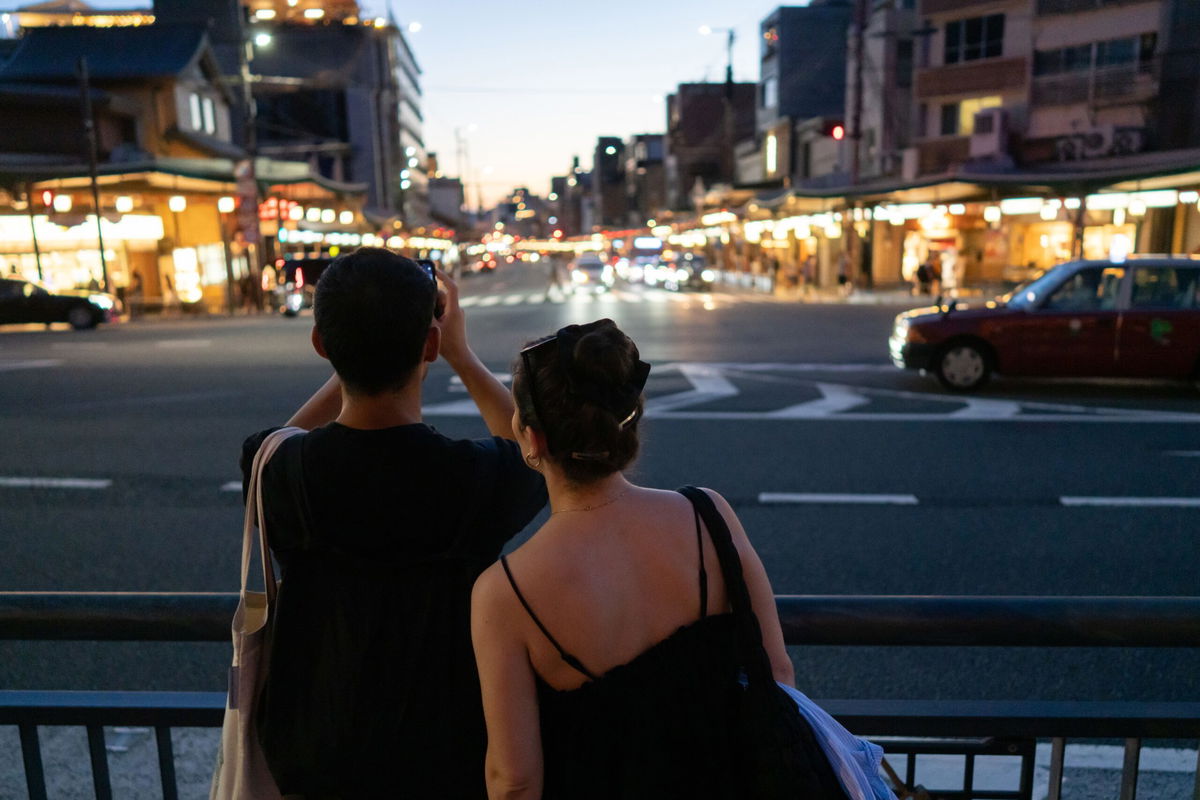
Although foreigners constitute merely about 3% of Japan’s 120 million inhabitants, the noticeable presence of international visitors and employees has increased considerably in recent times. Over the past ten years, the number of foreign residents rose from 2.2 million to almost 3.8 million. The surge in tourism following the pandemic has heightened this perception. In just the first half of 2025, more than 21 million tourists traveled to the country, establishing a new milestone.
This influx has led to visible tension in certain communities, particularly in tourist-heavy regions. Complaints from residents about overcrowding, disrespectful behavior, and strains on local resources have become increasingly common. In some areas, authorities have gone so far as to erect barriers to block popular photo spots, including a controversial screen placed to obscure views of Mount Fuji after local outcry over congestion and litter.
Even in places known for hospitality, such as hot spring towns, growing numbers of visitors have led to public concern about resource depletion and infrastructural wear. Additionally, some citizens point to rising costs for essentials like rice and housing, attributing them—rightly or wrongly—to foreign demand and external economic pressures.
Employment and public services under scrutiny
Another concern being raised in the lead-up to the election involves access to public services and job opportunities. Some Japanese citizens feel that foreign workers are crowding out domestic job seekers or receiving disproportionate access to welfare programs. Though these claims are often anecdotal, they are fueling populist rhetoric that appeals to voters feeling left behind in an evolving economy.
A Tokyo retiree, speaking anonymously, expressed skepticism about the cultural compatibility of foreign workers, stating that differing traditions make coexistence difficult. Meanwhile, younger voices, like that of a 23-year-old office worker, echoed the belief that government support should prioritize citizens over non-nationals.
These sentiments, while not necessarily supported by data, are being amplified by emerging political actors. The Sanseito party, a right-leaning nationalist group, has gained attention with its platform centered on prioritizing Japanese interests. Although unlikely to win a majority, Sanseito could still influence the balance of power by attracting disaffected voters from larger parties, including the ruling Liberal Democratic Party (LDP).
Separating perception from reality
Amid the mounting debate, experts caution that much of the current rhetoric is based more on perception than on factual trends. According to data from the Ministry of Justice, foreign nationals accounted for just over 5% of total arrests in 2023—a figure that includes both visitors and residents. Furthermore, Japan’s overall crime rate has been steadily declining over the past two decades, a trend that contradicts widespread concerns about deteriorating public safety.
Sociologists like Shunsuke Tanabe from Waseda University argue that increased visibility of foreigners has led to cognitive bias, causing some to mistakenly link demographic change with rising insecurity. He warns that such assumptions are easily exploited during election campaigns, especially in the digital age where misinformation spreads rapidly.
Tanabe additionally points out that social media has magnified divisive narratives, facilitating the rise of parties with anti-immigration agendas. The consequence is a political landscape where symbolic actions—such as setting up a new office—might have more significance than actual policy resolutions.
Political strategies with lasting effects
The stakes for Prime Minister Ishiba and the LDP are high. After losing their majority in the lower house last year, another poor showing in the upper house vote could intensify internal pressure on Ishiba to resign. With Sanseito projected to secure several seats, every measure to retain public confidence becomes crucial.
Some political observers view the new task force as a calculated attempt to appear responsive to voter concerns without drastically altering the nation’s immigration framework. Jeffrey Hall, a lecturer in Japanese studies at Kanda University, described the move as a tactical way to “signal strength” on a sensitive topic. However, he also warned that overly aggressive monitoring or restrictions on foreigners could backfire economically.
“If Japan creates an environment where foreign workers feel unwelcome or unfairly targeted, it risks undermining its own labor force goals,” Hall said. “In a country where the working-age population is shrinking, the need for international talent is not optional—it’s essential.”
A demographic reality that can’t be ignored
Japan continues to grapple with a major challenge: its demographic decline. In 2024, the birth rate in the nation fell to an unprecedented low of 1.15, significantly below the 2.1 level required to sustain a stable population without relying on immigration. With one of the world’s longest life expectancies, the country faces an aging population that increasingly depends on the younger workforce, a substantial portion of which must be sourced from overseas.
To address labor shortages, Japan has been expanding its visa programs, particularly those aimed at “specific skilled workers” in industries ranging from healthcare and construction to hospitality and aviation. As of October 2024, the number of foreign employees reached a new peak of 2.3 million, reflecting ongoing efforts to fill essential roles that Japanese workers alone can no longer meet.
Ishiba acknowledged this reality during the announcement of the new task force, stressing that Japan must remain open to global talent and tourism to secure long-term growth. “To navigate the challenges posed by a declining birthrate and an aging society, we must integrate the energy of the global community,” he said.
Looking ahead
As voting day approaches, Japan’s policies regarding foreign nationals will increasingly be influenced by the equilibrium between public opinion and economic needs. Even though issues related to cultural acceptance and resource allocation require careful consideration, specialists highlight the importance of policies based on data, avoiding impulsive actions motivated by populist anxiety.
Japan faces a pivotal moment—balanced between its traditional cultural uniformity and the necessities of a connected world. It is yet to be determined if the newly established task force will transform into a positive agent for inclusion or merely act as a token during election times. Regardless, the choices made at this juncture will have significant impacts on Japan’s future as both an international economic leader and a diverse community.