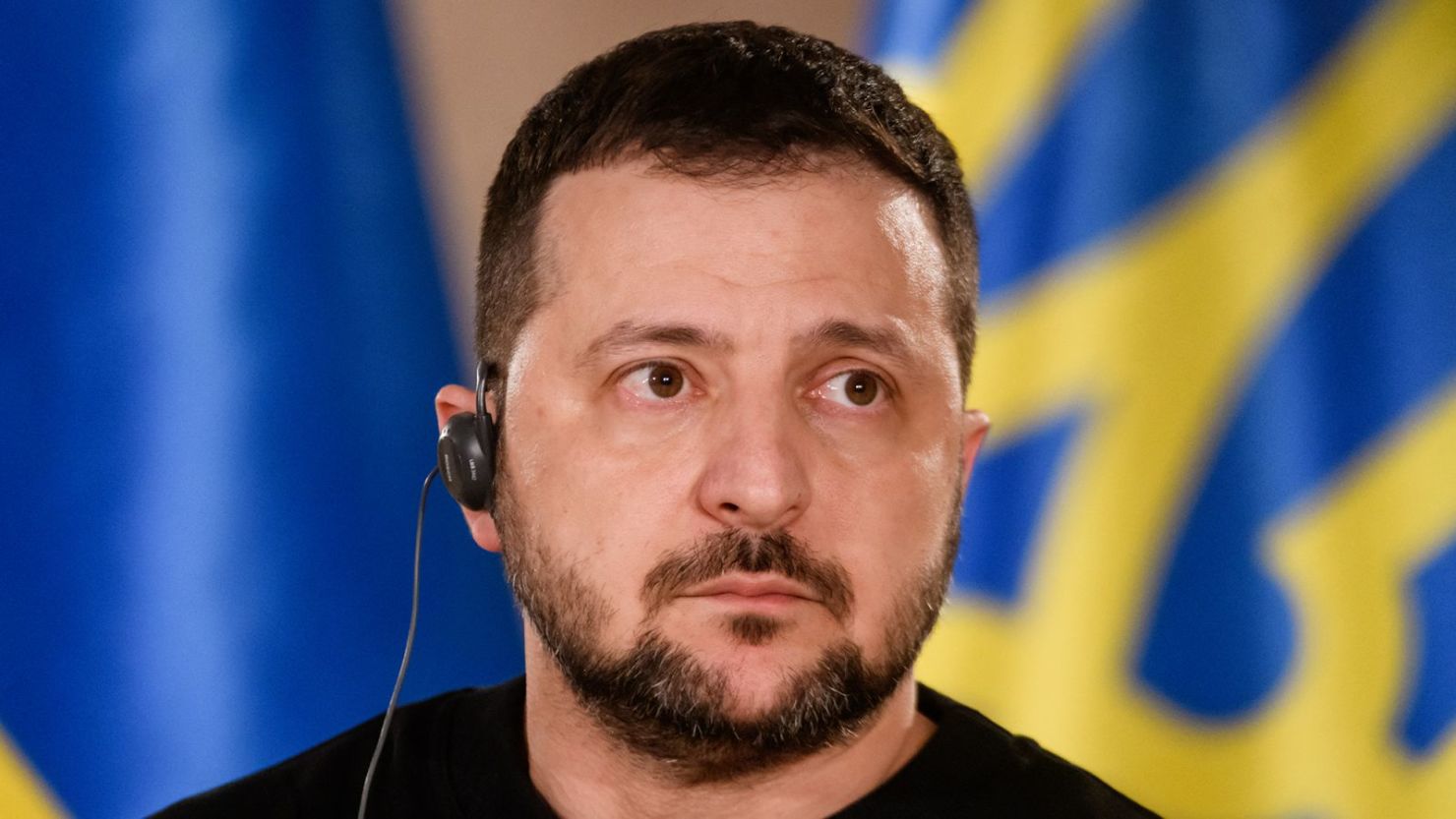

Ukraine and US Unable to Conclude Rare Earth Minerals Deal
On Friday, Ukrainian President Volodymyr Zelensky met with US President Donald Trump in Washington to sign an agreement granting the US access to Ukraine’s rare earth mineral deposits. However, the meeting took an unexpected turn, ending in a heated exchange between Zelensky, Trump, and Vice President JD Vance. Following Zelensky’s early departure, the White House announced that no agreement had been signed.
Zelensky had earlier conveyed hope that this “initial” agreement might lead to enhanced collaboration. Yet, he acknowledged that Ukraine still hadn’t obtained any security assurances from the US—a crucial point for him. Trump contended that the agreement could enable American taxpayers to “recover their funds” from the aid given to Ukraine during the conflict, but emphasized that Europe should assume the main role in ensuring Kyiv’s security.
Details of the Agreement Terms
On Wednesday, Ukrainian Prime Minister Denys Shmyhal announced that Kyiv and Washington had finalized a draft of the agreement, which was released on Friday morning. The deal outlined the creation of an “investment fund” to support Ukraine’s reconstruction efforts.
Shmyhal noted that the fund would be jointly managed by both countries on an “equal footing.” As per the agreement, Ukraine would contribute 50% of its future income from state-controlled mineral resources, oil, and gas to the fund. These funds would then be put toward projects focused on improving Ukraine’s security, stability, and economic development.
The US, for its part, committed to a sustained financial investment aimed at fostering stability and prosperity in Ukraine, in line with US law. The agreement also specified that the US would hold the largest share of the fund allowed by American rules.
Contentions Regarding Mineral Access and Financial Conditions
It seems that the discord between Trump and Zelensky intensified due to particular aspects of the minerals agreement. Initially, the US proposed a $500 billion stake in Ukraine’s mineral assets, which Zelensky declined. Sources suggest that this demand was subsequently revoked.
According to Tymofiy Mylovanov, a former Ukrainian minister and head of the Kyiv School of Economics, Washington initially proposed an arrangement that undermined Ukraine’s sovereignty and would have led to economic collapse. However, he noted that the US has since revised its approach, now offering a more balanced deal based on co-ownership, without direct claims on past aid. This, he argued, could ultimately benefit Ukraine.
Trump has emphasized the financial aspect, stating on Tuesday that the US has provided between $300 billion and $350 billion in aid to Ukraine and that a minerals deal could help recover these funds. However, the Kiel Institute, a German think tank, estimates that actual US assistance amounts to $119 billion.
Are Security Assurances Part of the Agreement?
A key issue for Zelensky has been obtaining clear security assurances from the US. On Wednesday, he affirmed that no such assurances had been secured.
“I sought a clause concerning security guarantees for Ukraine as it is vital,” Zelensky remarked.
When asked whether he would abandon the agreement if security assurances were not provided, he responded: “I want to secure a NATO path or something similar. Without security guarantees, there will be no ceasefire, and nothing will function.”
Despite the lack of direct security commitments, the agreement includes language indicating US support for Ukraine’s pursuit of security guarantees to achieve lasting peace.
Zelensky maintained that Ukraine would not finalize the agreement until he and Trump reached an understanding on security assurances and determined how to integrate them into the preliminary deal. Trump, however, downplayed the idea of direct US security guarantees, stating that such responsibilities should now be shouldered by Europe. He added that the presence of American workers in Ukraine would offer “automatic security.”
The concept of a minerals agreement was originally introduced by Zelensky as a means to provide the US with a tangible incentive to continue supporting Ukraine. Trump has suggested that, in exchange for mineral access, Ukraine would secure the “right to continue fighting” and that the US would keep supplying military equipment and ammunition “until a deal with Russia is reached.”
The US president has also claimed that Russia is open to allowing European peacekeepers in Ukraine. However, Russian Foreign Minister Sergei Lavrov has dismissed this possibility.
When Is the Agreement Expected to Be Signed?
Trump initially announced that the agreement would be finalized during Friday’s White House meeting. Although Ukrainian Prime Minister Shmyhal verified that the final draft of the agreement was ready, Zelensky’s adviser, Mykhaylo Podolyak, explained that only a framework agreement was meant to be signed.
No agreement was signed, though. Instead, the meeting escalated into a clash between Trump and Zelensky in the Oval Office. At one juncture, an irate Trump accused Zelensky of not showing enough gratitude for US aid and cautioned that he was “risking World War Three.”
“You have to finalize a deal, or we’re withdrawing,” Trump allegedly warned Zelensky. “You lack the leverage.”
Zelensky countered by asserting that there could be “no compromises” with Russian President Vladimir Putin.
Trump later shared on Truth Social, accusing Zelensky of having “disrespected the US in its esteemed Oval Office” and declaring: “He can return when he is prepared for peace.”
Currently, it remains uncertain whether the agreement will be signed or when it might occur.
Ukraine’s Abundance of Minerals
Kyiv estimates that Ukraine possesses about 5% of the world’s “essential raw materials.” This encompasses roughly 19 million metric tons of verified graphite deposits, ranking Ukraine among the top five suppliers globally of this mineral, which is vital for manufacturing electric vehicle batteries.
Additionally, Ukraine has significant deposits of titanium and lithium. The country also claims to hold substantial reserves of rare earth elements—17 minerals essential for military technology, wind turbines, and electronic devices—though some experts dispute the exact scale of these reserves.
Adding to the complexity, certain mineral-abundant regions of Ukraine are presently under Russian control. Economy Minister Yulia Svyrydenko has indicated that mineral deposits with an estimated value of $350 billion are situated in areas occupied by Russia.
Another obstacle to mineral extraction is the widespread presence of unexploded landmines. Experts estimate that around 25% of Ukraine’s landmass is contaminated, particularly in the war-torn eastern regions.
There is also the issue of time. Even if the agreement is finalized, it could take years before the extraction and export of these resources yield tangible economic benefits.
“These resources are not stored in a warehouse ready for dispatch—they need to be developed,” explained Mylovanov. “Should the US invest, it could eventually prove advantageous for everyone involved.”
What is Russia’s Response?
Russian President Vladimir Putin has not yet addressed the reported particulars of the US-Ukraine agreement. Nonetheless, on Monday, he informed Russian state television that Moscow is willing to “provide” mineral resources to American companies for cooperative ventures, including extraction in Russia’s “new territories”—alluding to the occupied regions of eastern Ukraine.
Putin downplayed the potential US-Ukraine agreement, asserting that Russia “indisputably possesses, I want to stress, far more of these resources than Ukraine.”
“Regarding the new territories, we are open to involving foreign partners in developing these areas, which have rejoined the Russian Federation,” he stated.
In the meantime, Kremlin spokesperson Dmitry Peskov indicated on Tuesday that the circumstances are still evolving: “Whether [Ukraine and the US] will finalize this agreement or something else, remains to be seen. No official announcements have been made on this issue yet.”